

Sector: Technology, Semiconductors, Edge AI
Snapshot: (as of 4th June 26)
Share Price: AUD 0.0490
Market Cap: AUD 52.94 M
Enterprise Value: AUD 46.27 M
Cash: Last reported cash at 31 March 2026 was A$6.672 million
What Does Nanoveu Do?
Nanoveu Limited (ASX: NVU) is an ASX-listed technology company building a next-generation edge AI platform through its semiconductor business EMASS, while also retaining exposure to EyeFly3D and Nanoshield.
The story has evolved materially since the earlier Phoenix website page was published. Nanoveu is no longer only a legacy nanotechnology and display company with exposure to several product lines. It is now increasingly being positioned around ultra-low-power AI chips for edge devices, with EMASS becoming the lead commercial and strategic focus.
At the centre of this shift is the ECS-DoT semiconductor platform, a low-power, event-driven edge AI system-on-chip designed for always-on applications where size, heat, battery life and latency matter. This includes wearables, hearables, drones, industrial sensing, robotics and other devices that need AI processing without constant cloud dependence.
Nanoveu still has product optionality through EyeFly3D and Nanoshield, but the main reason the company is attracting attention is the growing progress of EMASS as a semiconductor platform with real technical milestones, expanding applications and growing industry partnerships.
Recent Developments
- May 2026: Nanoveu announced it will acquire Spinoff Robotics, expanding the group’s drone and autonomous systems capability. The proposed deal adds proprietary drone platforms and in-house robotics engineering capability, which strengthens the practical application layer for EMASS in surveillance, inspection and autonomous flight.
- April 2026 quarter: Nanoveu reported that EMASS had completed tape-out of its 16nm ECS-DoT chip and commenced fabrication at TSMC, marking an important milestone in the move from design to silicon. The quarterly update also highlighted progress in hearables, drones and industrial applications.
- March 2026: EMASS announced a new hearables reference design for always-on keyword spotting, combining ultra-low-power edge AI with motion-triggered sensing. This expands EMASS into another high-value wearable category where low power consumption is critical.
- February 2026: Nanoveu secured an exclusive licence to autonomous drone swarm IP, broadening its position in drone software and coordination technologies and adding another practical use case for EMASS in real-world edge AI deployments.
- Late 2025 to early 2026: EMASS continued to strengthen its industry footprint through collaboration work with Semtech and Arrow Electronics, supporting broader commercial visibility and deployment pathways.
EMASS, the Lead Business
EMASS is now the core technology driver within Nanoveu.
Its ECS-DoT-22 is designed as an ultra-low-power edge AI SoC for always-on intelligence. According to the company website, the chip is built on an event-driven architecture that activates AI processing only when meaningful data is detected. This is important because it allows devices to stay in a very low-power state for most of the time, then respond quickly when needed.
The product positioning is built around several core strengths:
- ultra-low power consumption suited to battery-constrained devices,
- fast on-device inference without the latency of cloud processing,
- multimodal processing across audio, vision and sensor data,
- compact form factor for wearables and embedded devices, and
- always-on capability for applications where continuous monitoring is required.
Nanoveu’s current product material highlights:
- 30 GOPS of AI performance,
- 4MB of on-chip memory,
- a 32-bit RISC-V core,
- dual deep learning accelerators, and
- support for low-power interfaces and embedded deployment.
This matters because EMASS is not being positioned as a generic AI chip. It is being designed specifically for applications where conventional processors often use too much power, generate too much heat or require too much battery capacity.
Drones, Robotics and Industrial Applications
One of the more important changes in the Nanoveu story is the expansion into drones and robotics.
The proposed acquisition of Spinoff Robotics and the earlier exclusive drone swarm IP licence both point in the same direction. Nanoveu is not only building AI silicon, it is also building application pathways where that silicon can be deployed in practical and potentially high-value markets.
This is strategically important because drones are a strong fit for edge AI chips. Flight systems, obstacle detection, navigation, sensor fusion and real-time decision-making all benefit from low-latency processing and tight power budgets. In these environments, performance per watt matters far more than raw data centre-style compute.
That makes drones and robotics a natural commercial market for EMASS.
Industrial sensing is another area of relevance. EMASS has also demonstrated use cases around predictive maintenance and sensor monitoring, including collaboration work with Semtech using LoRaWAN-enabled designs. This opens a second pathway for adoption beyond consumer and wearable devices.

Hearables and Wearables
Nanoveu is also building a stronger position in hearables and wearables, which are among the most natural product categories for ultra-low-power AI chips.
The March 2026 hearables update is important because always-on keyword spotting is a demanding real-world edge AI task. Devices in this category need to stay active continuously while preserving battery life and responding quickly when triggered.
This is exactly the type of use case where EMASS is trying to differentiate itself. If the platform continues to prove itself in hearables, it strengthens the company’s broader positioning in smart glasses, health wearables, sensors and other always-on connected devices.
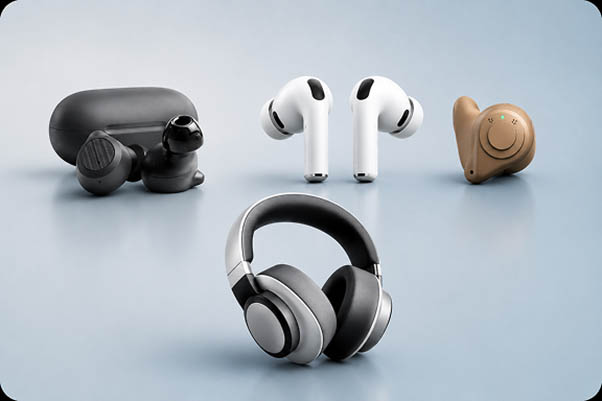
Enabling Next-Generation Audio Devices with Always-On AI, Context Awareness, and Ultra-Low-Power Intelligence.
EyeFly3D
EyeFly3D remains a meaningful part of the Nanoveu story, although it now sits behind EMASS in strategic importance.
The platform allows glasses-free 3D visualisation across mobile and digital displays, and it remains one of Nanoveu’s more visible consumer-facing technologies. The original Phoenix report also highlighted the South Korean distribution agreement as an early sign of commercial traction.
The more important point now is the connection between EyeFly3D and EMASS. Nanoveu has previously presented EMASS as a way to improve the efficiency and scalability of 3D content conversion and visualisation at the edge. That means EyeFly3D is not just a legacy product line, it can also act as a practical internal use case for the group’s semiconductor strategy.
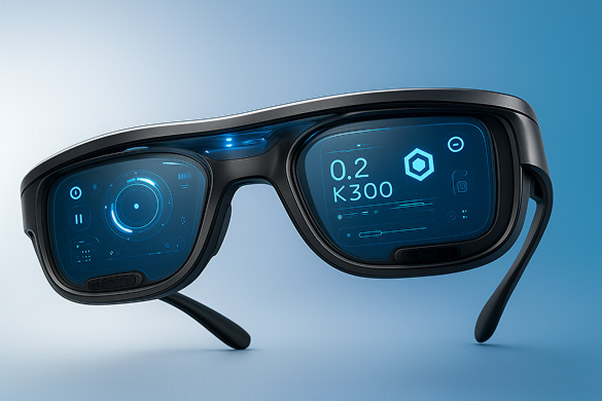
All-Day AR Wearability with Always-On Perception, Event-Driven Intelligence, and Ultra-Low-Power Computing.
Peer Analysis
Based on Phoenix Global’s earlier NVU report, the most relevant listed peer comparisons remain Weebit Nano, BrainChip, and to a lesser extent 4DS Memory and other early-stage semiconductor technology names.
The key distinction is that Nanoveu, through EMASS, is trying to build a more integrated edge AI compute platform, rather than focusing only on memory IP or only on a specialised processing architecture.
- Weebit Nano is a useful peer because of the ReRAM angle, but Weebit is a memory IP company rather than a full edge AI compute platform.
- BrainChip is a useful AI semiconductor peer, but its positioning is centred on neuromorphic processing rather than Nanoveu’s low-power event-driven edge AI architecture.
- 4DS Memory is a memory technology peer rather than a direct AI processing comparison.
What makes Nanoveu different is the combination of:
- ultra-low-power edge AI compute,
- embedded memory integration roadmap,
- real-world application focus across drones, hearables, wearables and industrial sensing, and
- commercialisation through platforms and partnerships, not only through pure IP licensing.
Phoenix’s earlier report also highlighted Nanoveu’s efficiency advantage as a central differentiator. That still matters. In a market where many AI chip companies are judged on raw compute, Nanoveu is trying to compete on performance per watt, which is often the more important metric for small devices operating at the edge.
For that reason, Nanoveu should be viewed less as a direct peer to large mainstream semiconductor companies and more as an emerging specialist in ultra-low-power edge AI, where power efficiency, latency and compact integration are the real competitive battleground.
Leadership
- Dr. David Pevcic, Executive Chairman
- Alfred Chong, Group Chief Executive Officer
- Mohammed M. Sabry, Director and Founder of EMASS
- Raymond Chen, Director and Chief Financial Officer
The current leadership structure reflects the company’s shift toward semiconductors, with EMASS founder Mohammed Sabry remaining a key part of the technical story and Alfred Chong continuing to lead the broader group strategy.
Upcoming Catalysts
- Progress on 16nm ECS-DoT fabrication and silicon validation
- Further updates on EMASS commercial deployment
- Expansion of drone and robotics applications following the Spinoff Robotics transaction
- Additional traction in hearables, wearables and industrial sensing
- Potential further development of the ReRAM integration roadmap
- Ongoing business development through Semtech, Arrow and other industry channels
Investment View
Nanoveu is increasingly becoming an edge AI semiconductor story built around EMASS.
That is the key change from the earlier Phoenix website page. The company still has a broader technology portfolio, but the main investment case now sits with its ability to develop and commercialise ultra-low-power AI chips for devices that need real-time intelligence without high power draw.
The story has also improved because Nanoveu is no longer relying only on high-level semiconductor positioning. The company has now moved through several visible milestones, including 16nm tape-out, hearables development, drone IP expansion and the proposed acquisition of Spinoff Robotics.
The peer comparison also remains attractive. Relative to ASX-listed semiconductor names covered in Phoenix’s earlier report, Nanoveu offers a differentiated edge AI angle built around low-power compute, application-specific deployment and integrated product pathways.
For Phoenix readers, the appeal is the combination of a still-small listed vehicle, a more focused semiconductor identity, practical commercial use cases and multiple upcoming technical and commercial catalysts.
Ongoing Research Articles
Nanoveu Ltd Investment Report
About: Nanoveu Limited Overview Nanoveu Limited (ASX: NVU) is a Singapore-based technology company specialising in nanotechnology-driven solutions across semiconductors, visualisation, and materials science. Since its founding in 2012, [...]